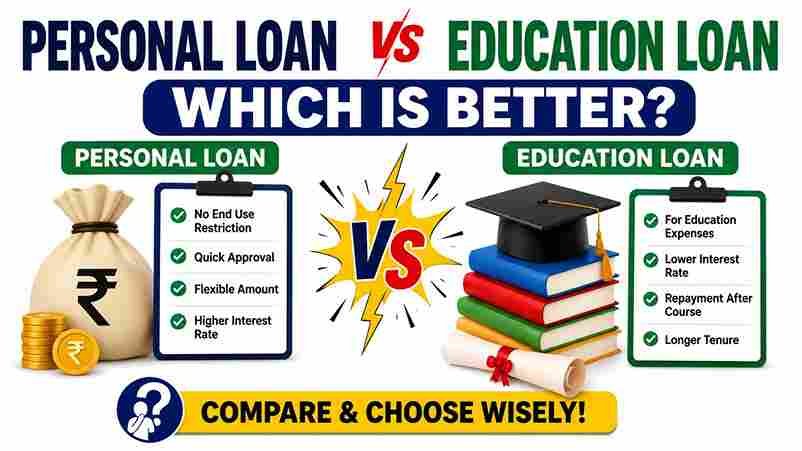
Choosing between a personal loan and an education loan can be confusing, especially when you need money for higher studies. Both options can provide financial support, but they are designed for different purposes and come with different repayment conditions. An education loan is specifically meant to cover expenses related to approved courses, such as tuition fees, hostel charges, books, and other education costs.
A personal loan, on the other hand, can generally be used for many personal expenses without restricting the purpose of borrowing. The right option depends on the amount you need, your eligibility, repayment capacity, interest cost, and the type of education you plan to pursue. Before applying, students and families should understand how these loans differ. Comparing the total borrowing cost and repayment flexibility can help you choose a loan that fits your financial situation without creating unnecessary pressure after graduation.
What Is an Education Loan?
An education loan is designed specifically to help students pay for higher education. Depending on the lender and course, it may cover tuition fees, examination charges, hostel expenses, books, equipment, and certain other study-related costs.
One major advantage is that repayment may begin after the course or after a specified moratorium period. This can give students some time to complete their studies and start earning before regular repayments become a major financial responsibility.
What Is a Personal Loan?
A personal loan is generally an unsecured loan that can be used for different purposes. Unlike an education loan, the borrower usually does not have to prove that the money will be spent on education.
Personal loans can offer faster processing and flexible usage, but they may come with higher interest costs compared with some education loan options. The borrower also normally starts paying EMIs relatively soon after receiving the loan.
Personal Loan vs Education Loan: Key Differences
The biggest difference is the purpose of borrowing. An education loan is meant for eligible educational expenses, while a personal loan provides greater freedom regarding how the money is used.
Education loans may offer longer repayment periods and a study-related moratorium. Personal loans often have shorter repayment periods and may result in higher monthly EMIs.
Another difference is security. Some education loans may require a co-borrower or collateral depending on the amount and lender’s rules. Personal loans are usually unsecured, so approval can depend heavily on income, credit history, and repayment capacity.
Which Loan Usually Costs Less?
There is no single answer because interest rates vary between lenders and borrowers. However, education loans can sometimes be more affordable for students because they are specifically designed for education financing.
Personal loans may become expensive when borrowed for a large amount or repaid over a short period. Always compare the interest rate, processing fee, repayment period, and total interest payable before choosing either option.
Which Loan Is Better for Students?
For genuine education expenses, an education loan is generally the more suitable option because its structure is designed around higher education. It may also provide a repayment break during the study period, depending on the lender.
A personal loan could make sense when the required amount is relatively small, quick funding is important, or the expense does not qualify under an education loan.
Frequently Asked Questions
1. Is an education loan better than a personal loan for college fees?
For eligible college expenses, an education loan is generally more suitable because it is specifically designed for education and may offer a longer repayment structure.
2. Can I use a personal loan to pay education expenses?
Yes, a personal loan generally provides flexible usage, so borrowers may use the funds for education-related expenses. However, the cost and repayment terms should be compared carefully.
3. Which loan has a longer repayment period?
Education loans commonly offer longer repayment periods than personal loans, although the exact duration depends on the lender, course, loan amount, and applicable terms.
Final Verdict
If you are borrowing mainly for higher education, an education loan is usually the first option worth considering. A personal loan can be useful when you need flexible financing or quick access to funds. Before making a decision, compare the total cost, EMI, repayment period, eligibility requirements, and any additional charges. Choosing the loan that matches your actual need can help you manage your finances more comfortably during and after your studies.